I’m crying while I write this.
That feels like the right place to start.
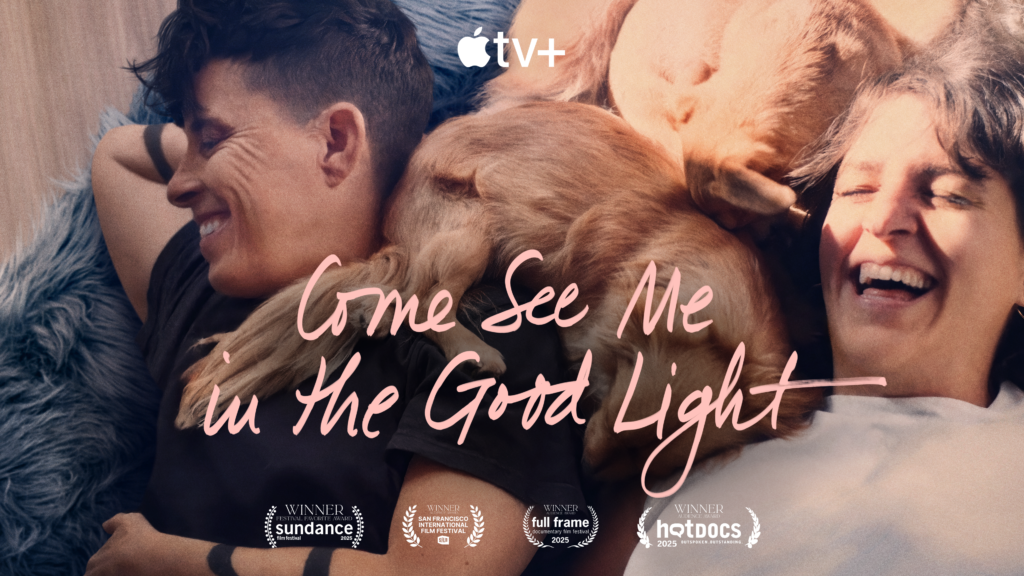
Recently I watched the documentary Come See Me in the Good Light, a film about Love, Grief, Humanness, Healing whilst dying. It focused on Andrea Gibson and their partner Meg, and it cracked something open in me. I knew of Andrea before watching the film. I knew they were an extraordinary poet, Colorado’s Poet Laureate, and someone whose work has held space for many people navigating identity, belonging, and pain.
But watching this documentary did something powerful to me. It didn’t just show me a story about illness. It showed me something about love that I rarely see portrayed with such honesty.
I wrote the blog whilst listening to the song “Salt then Sour then Sweet” by Sara Bareilles (and my fave, Brandi Carlile), written from the fumes of Andrea’s words and messages in a way that haunts and fills me up.
I’m writing this not only as a psychotherapist who works with relationships every day, but as a human being who was profoundly moved by witnessing the love in the movie. The love that was present for both Andrea and Meg for themselves, that I felt was fought for tooth and nail, but also between Andrea and Meg. Also between the kinship with loved ones.
It highlighted the forever type of love that outcasts and marginalised folks recognise of “once I’ve loved you, I always will”. To summarise a message from Andrea in the movie, people in the queer community understand the grief of loss so deeply. Therefore, when you find a clan, or a person, you hold on to them.
The Mailbox Metaphor
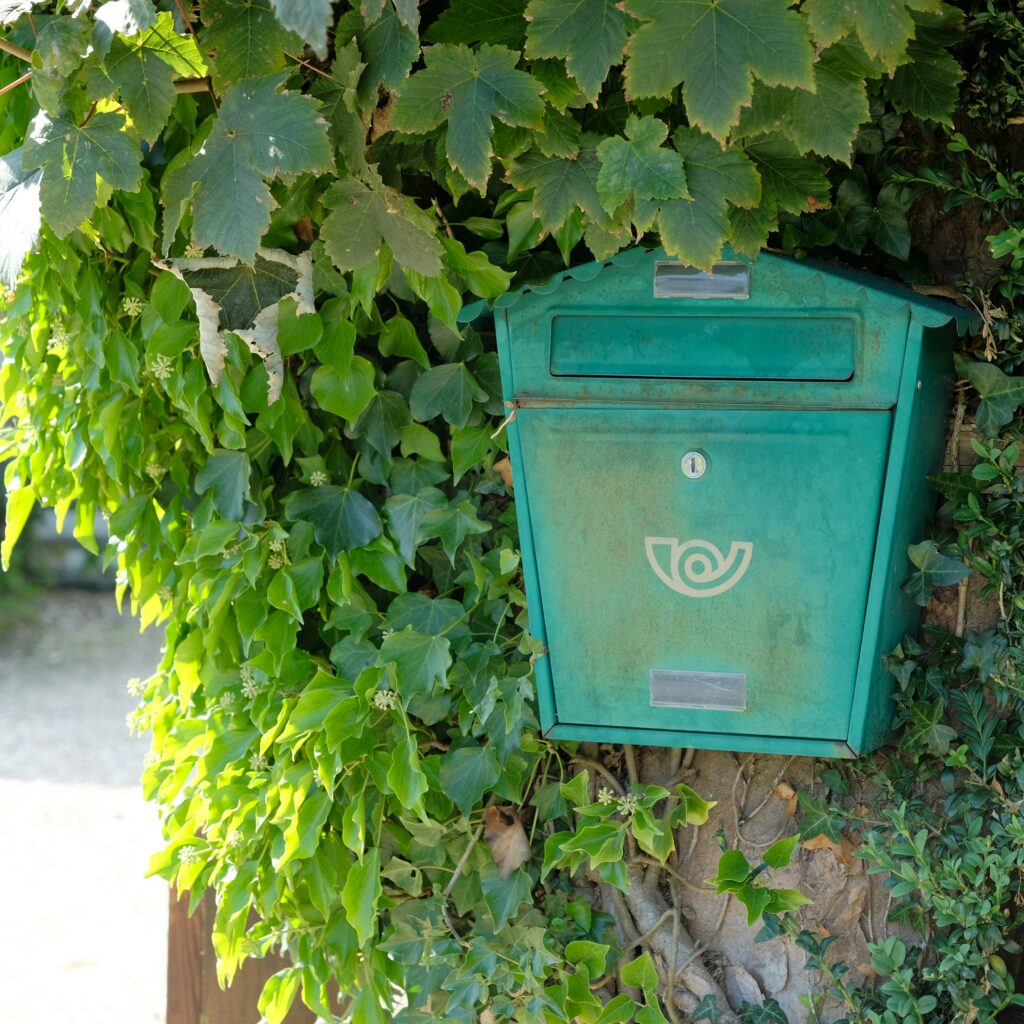
There is a small recurring story in the documentary about a mailbox.
Andrea keeps trying to fix it. It keeps getting knocked down. Broken. Damaged. Misaligned.
The postal worker refuses to deliver mail unless the mailbox is positioned correctly.
Andrea keeps trying to repair it.
Watching this unfold, I couldn’t stop thinking about the symbolism of it.
The mailbox as the body.
The mailbox as the receiver of connection.
The mailbox as the place where love letters may arrive.
Society often tells us that in order to receive love, our mailbox must look a particular way.
It must be straight and intact.
Recognisable.
Acceptable.
But Andrea says something that undoes that entire premise.
If they were the postal worker, they say, they would deliver the mail anyway. Because they could see how hard the person had tried.
That line has stayed with me ever since.
Because it speaks to something so many people carry inside themselves:
The belief that our mailbox/body/personality/history is somehow wrong.
That love might not arrive here. Maybe we hear the message over and over…
“Maybe love is not meant for me?”
What I hear whispered throughout their story together is:
“Your mailbox could be decimated, unrecognisable to the average eye as a mailbox, and I would write, and walk 100 miles to hand deliver a love letter to you every day of our lives.”
The Love Story at the Centre
Andrea Gibson was diagnosed with an aggressive ovarian cancer. The documentary follows the years that unfold after that diagnosis.
At the time Andrea received the news, they had been dating Meg for a few years. In the immediate aftermath of the diagnosis, Andrea tried to end the relationship.
Which, in many ways, makes perfect sense.
Grief does strange things to us.
Fear does strange things to us.
Love does strange things to us.
My sense watching that moment is that Andrea was trying to protect Meg from the life that might follow. The life of hospital rooms, treatments, uncertainty, and caregiving.
But Meg responded in a way that said something profound about commitment.
She proposed.
And so the two of them stepped into the unknown together.
Meg talks of their lives unfolding in increments of three weeks. Every three weeks there are scans, blood tests, and updates on how the cancer is spreading or responding to treatment. Their life becomes structured around these cycles of hope, fear, and waiting.
Yet what struck me most is not the illness.
It is the quality of their connection.
The Emotional Honesty of Secure Love
Watching Andrea and Meg together, you see something that therapists talk about often but that is rarely depicted this clearly: secure attachment.
Their emotional world is astonishingly open.
They process feelings in real time. They cry. They rage. They laugh inappropriately. They make dark jokes. They allow each other’s emotions to exist without trying to tidy them up.
There is a moment in the documentary when Andrea talks about the steroid treatments they receive during chemotherapy and the “roid rage” that sometimes follows. They laugh about the fact that there is often a predictable moment in which Andrea will say in such frustration or even anger “At the very least…”:
“At the very least… could you turn the lights down for me?”
“At the very least… could you bring me another blanket?”
They both know that on those days Beautiful Meg has likely already done a thousand things to care for her Darling Andrea. Yet the two of them laugh about it together. Not in a dismissive way, but in a way that recognises something deeply human.
We are messy.
We are needy.
We are unfuckingreasonable.
And love can hold that.
Watching them move between supporting one another, sometimes Andrea holding Meg’s grief and sometimes Meg holding Andrea’s fear, felt like watching a living demonstration of relational reciprocity.
This is what secure love looks like.
Not perfect behaviour.
But the freedom to be fully human together.
The Ache of Loving in Mortal Bodies
One of the most powerful themes throughout the documentary is the way it confronts mortality.
Andrea and Meg are living with the knowledge that one of them will likely die very soon, despite the unyielding hope they both so often display that a miracle will come along. I believe the miracle is already there. Their love for each other, their courage, their invitations moment to moment to each other to BELONG exactly where they are.
It reminded me of something many people say about grief:
Love does not save us from grief. Love is grief.
The price of loving someone is knowing that loss is possible, or inevitable.
But what Andrea and Meg show us is that grief does not diminish love. It reveals the depth of it.
They allow themselves to feel the waves of it all: terror, sadness, humour, tenderness, rage, and gratitude.
Sometimes all within the same moment.
The Body as a Place of Belonging

Another thread that runs throughout the film is the relationship both Andrea and Meg have had with their bodies.
Andrea speaks openly about their past struggles with depression and suicide ideation. There were long periods in their life where they did not know if there was a place for them in the world.
Meg shares a different but equally familiar story: a lifetime of body image struggles and internalised shame about her body.
Many people know this feeling.
The quiet belief that our body is something someone will have to tolerate in order to love us.
Something they will need to “get past”.
And then there is a moment that feels almost mythic in its simplicity.
Meg recalls one of the first intimate moments they shared. Andrea looked at her naked body, kissed her belly, and repeated the words:
“Sexy. Sexy. Sexy.”
You can see, in Meg’s telling of the story, that something healed in that moment.
Not because Andrea said the right words. But because they saw her differently than she had seen herself.
And sometimes that is enough to begin rewriting a story we may have carried our entire life.
The Courage of Being Seen
As a therapist, I spend my days talking with people about relationships.
Conflict. Disconnection. Longing. The hope that love might feel different.
And what struck me watching this documentary is how clearly Andrea and Meg demonstrate something that many couples struggle to achieve.
They see each other.
Fully.
Not the curated versions of themselves. But the fear. The anger. The grief. The imperfection.
They welcome each other’s humanity without trying to erase it.
There is a kind of relational courage in that.
The courage to let someone see you exactly as you are.
The courage to love someone exactly as they are.
Seeing Ourselves in the Good Light
The title of the documentary comes from a line that echoes throughout the film.
Come see me in the good light.
At first it sounds like a request we make of other people.
See the best in me.
See the part of me that is worthy.
But as I sat with the film afterwards, another question kept coming back to me.
Do we see ourselves in the good light?
Because sometimes the person who struggles most to deliver love letters to our mailbox is us.
Maybe the invitation Andrea and Meg leave us with is something like this:
At the very least… see yourself in the good light.
At the very least… allow your rage, your grief, your joy, and your tenderness to exist.
At the very least… believe that your mailbox deserves to receive love letters.
Even if it looks different from the one next door.
Especially then.